

Your car's shocks and struts do heavy lifting every time you drive. They control how your vehicle bounces, handles corners, and stays planted on the road. When they start to wear out, you'll feel it right away. Here are the signs of bad shocks and struts you need to know about.
What Do Shocks and Struts Do?
Before we talk about failure signs, let's keep it simple. Shocks and struts are suspension parts that absorb bumps and keep your tires in contact with the road. Without them working right, your ride becomes unstable and unsafe.
Shocks are hydraulic cylinders mounted on the rear or front (depending on your car's setup). Struts combine a shock absorber with other suspension parts into one unit. Either way, when they wear out, your whole car's handling suffers.
Excessive Bouncing After Bumps
Push down hard on each corner of your car. Release and watch what happens. A healthy vehicle bounces once or twice and then settles. If your car keeps bouncing up and down like a pogo stick, your shocks or struts are likely worn.
Related: Transmission Slipping Symptoms: What to Watch For
This bouncing happens because the worn dampers can't absorb and dissipate energy the way they should. Every pothole, speed bump, or uneven pavement triggers an exaggerated reaction. You'll feel it in the steering wheel and seat, and it's uncomfortable for everyone in the car.
If you're noticing this, don't ignore it. The longer you drive on bad shocks, the more stress you put on other suspension parts. Morgatech Auto Repair can inspect your suspension system and let you know exactly what needs fixing.
Nose Diving When You Brake
Pay attention to what happens when you hit the brakes hard. Does the front of your car dip down more than feels normal? That's called nose dive, and it's a classic sign of worn front struts.
When your front struts are shot, they can't support the weight transfer that happens during braking. Your car's nose plunges, the rear end rises, and you get an unbalanced, lurching feeling. This also reduces your braking effectiveness and makes your stopping distance longer.
Nose dive is more than just uncomfortable. It affects your safety. If you're seeing this, get your suspension checked soon.
Rear Squat During Acceleration

The opposite problem happens in the back. When you step on the gas, does the rear end sag or squat down? That's a sign your rear shocks are worn.
A healthy suspension lifts and stays level during acceleration. Worn rear shocks can't control that weight shift, so the back end dips. Like nose dive, rear squat throws off your vehicle's balance and can make handling feel unpredictable.
Poor Handling and Loss of Control
Bad shocks and struts make your car feel unstable in general. You might notice the vehicle doesn't respond as crisply when you turn the steering wheel. Cornering feels loose or sloppy. On highway curves, your car might lean or sway more than it should.
This is dangerous because your tires aren't staying in firm contact with the road. Wet roads and emergency maneuvers become riskier. If your car feels less stable than it used to, your suspension is probably compromised.
Excessive Sway or Roll When Turning
A well-tuned suspension keeps your car level when you corner. If you're feeling the vehicle tilt or lean heavily to one side when you turn, your shocks or struts aren't doing their job.
This sway is especially noticeable during quick lane changes or curves on familiar roads where you know how the car used to handle. If it feels much different now, wear is likely the culprit.
Over time, this kind of body roll puts extra stress on your tires and can lead to uneven tire wear and other suspension damage. It's worth addressing before things get worse.
Uneven Tire Wear
Look at your tires closely. Are they wearing evenly across the tread, or do you see more wear on one edge? Uneven wear is often a clue that your shocks or struts are bad.
When suspension components wear out, your tires don't sit flat on the road. Some parts of the tire touch down harder than others, causing accelerated wear in those spots. You might see wear on the inner edge, outer edge, or both, depending on what's going on with your suspension.
Checking tire wear is an easy habit. It can catch suspension problems before they become serious.
Vibration While Driving
Noticeable vibration in the steering wheel, seat, or floorboard is another red flag. Worn shocks and struts can't dampen the energy from road imperfections, so vibration gets transmitted directly to you.
Vibration might get worse at certain speeds or on certain road surfaces. If it's constant or getting stronger, your suspension needs attention.
Leaking Fluid on the Shock or Strut Body
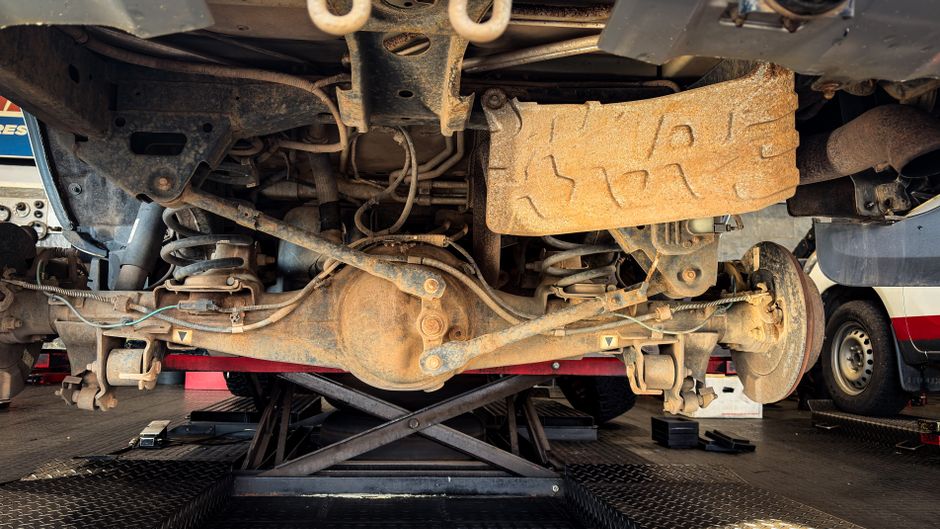
Do a quick visual check under your car. Look at the strut or shock bodies, especially near the top of each wheel. If you see an oily or wet film, your shocks or struts are leaking hydraulic fluid.
Inside each shock and strut is pressurized fluid that does the damping. When the seals fail, that fluid leaks out, and the part stops working. A leak is a sure sign you need a replacement.
This is one of the easiest signs to spot and one of the most definitive. If you see it, your shocks or struts are done.
What to Do If You Suspect Bad Shocks or Struts
If you're noticing one or more of these signs, don't wait. A worn suspension system affects your safety and can cause damage to other parts of your car.
The best first step is a professional inspection. A technician can put your car on a lift, look at the shocks and struts directly, test the suspension response, and tell you what's wrong and what it will cost to fix.
Morgatech Auto Repair serves drivers across Beltsville, College Park, Laurel, Greenbelt, and Prince George's County. The team will explain what they find and give you a clear quote before any work starts. Most suspension repairs are backed by a 24-month / 24,000-mile TechNet nationwide warranty, so you can have confidence in the fix.
If you're ready to get your suspension checked, call or visit the shop in Beltsville. Hours are Monday to Friday, 9 am to 6 pm.
Common Questions About Bad Shocks and Struts
How long do shocks and struts typically last?
Shocks and struts don't have a set expiration date. They wear based on your driving habits, road conditions, and how much weight your car carries. Some people get five years out of them; others get ten. The key is paying attention to the warning signs and getting them inspected if something feels off.
Can I drive on bad shocks or struts for a while?
You can, but you shouldn't. Worn shocks and struts make your car handle poorly and put extra stress on your tires, brakes, and other suspension parts. The longer you wait, the more damage you risk. It's safer and usually cheaper to fix the suspension sooner rather than later.
Do I need to replace both shocks or struts at the same time?
If one side is worn, the other is likely not far behind. Most shops recommend replacing them in pairs (both fronts or both rears) so your suspension stays balanced. Replacing just one can lead to handling problems and uneven wear.
Is suspension repair expensive?
Suspension repair costs depend on what's wrong, what kind of vehicle you drive, and what parts need replacing. The only way to know what you'll pay is to get an inspection and quote. Call Morgatech Auto Repair and ask for details on pricing for your specific situation.